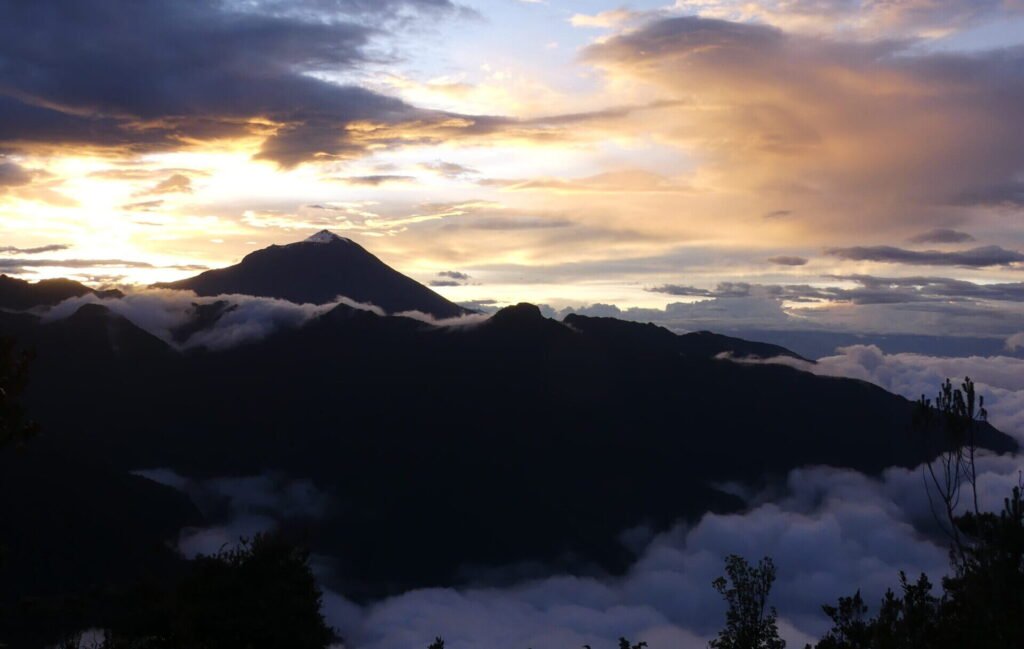
This reserve lies within the Cerro Candelaria Protected Forest and was made possible thanks to funding from the UK-based conservation travel company Naturetrek. It protects high Andean forest and serves as an important corridor for species like the Spectacled Bear and Mountain Tapir. The area is especially rich in orchids and herpetofauna.
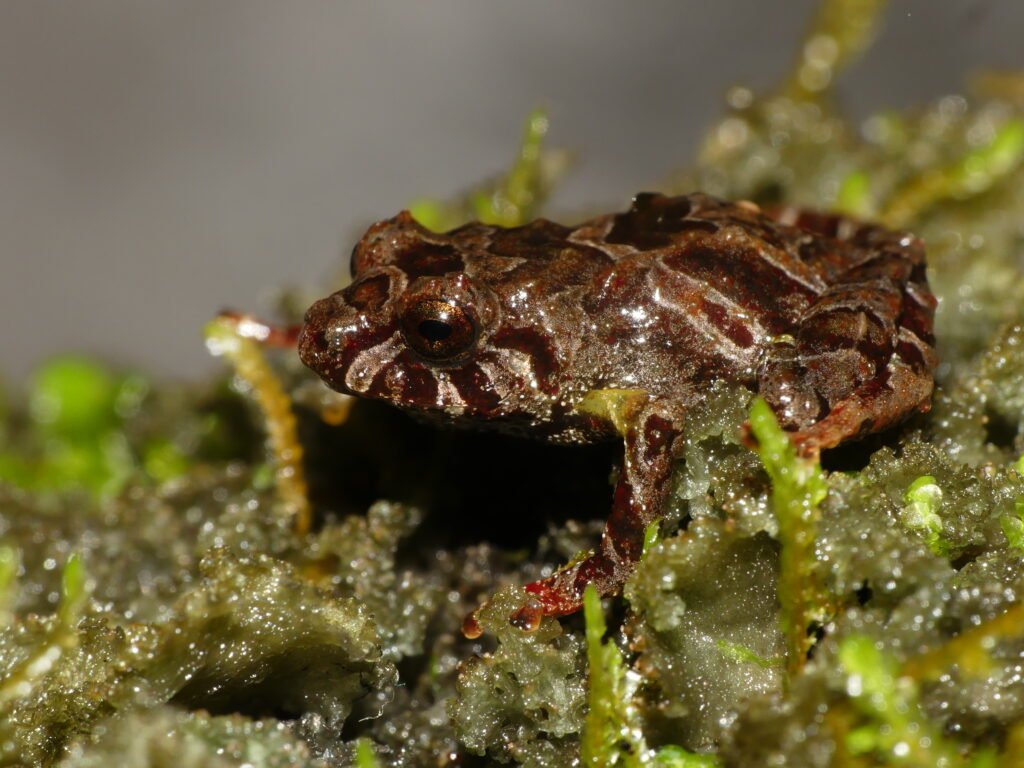
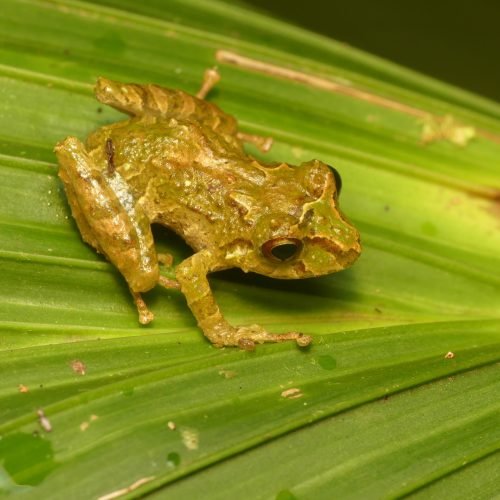
It is home to Pristimantis marcoreyesi, a recently described species named in honor of conservationist Marco Monteros.
Flora and Fauna
This reserve protects many endangered and endemic species, including 23 species of large mammals such as Tapir Andino (Tapirus pinchaque, IN), the Andean Bear (Bear (Tremarctos ornatus), VU), as well as other mammals minor as the Tigrina Northern (Leopardus tigrinus, VU), White-Lipped Peccary (Tayassu pecari, VU) or the Soche (Mazama rufina, VU), together with 11 species of small mammals. In Cerro Candelaria have been recorded 98 species of birds, among which are the Andean Eagle (Spizaetus isidoriIN), the Gralaria Giant (Grallaria gigantea, VU) and the Toucan Andean Pechigris (Andigena hypoglauca, NT).
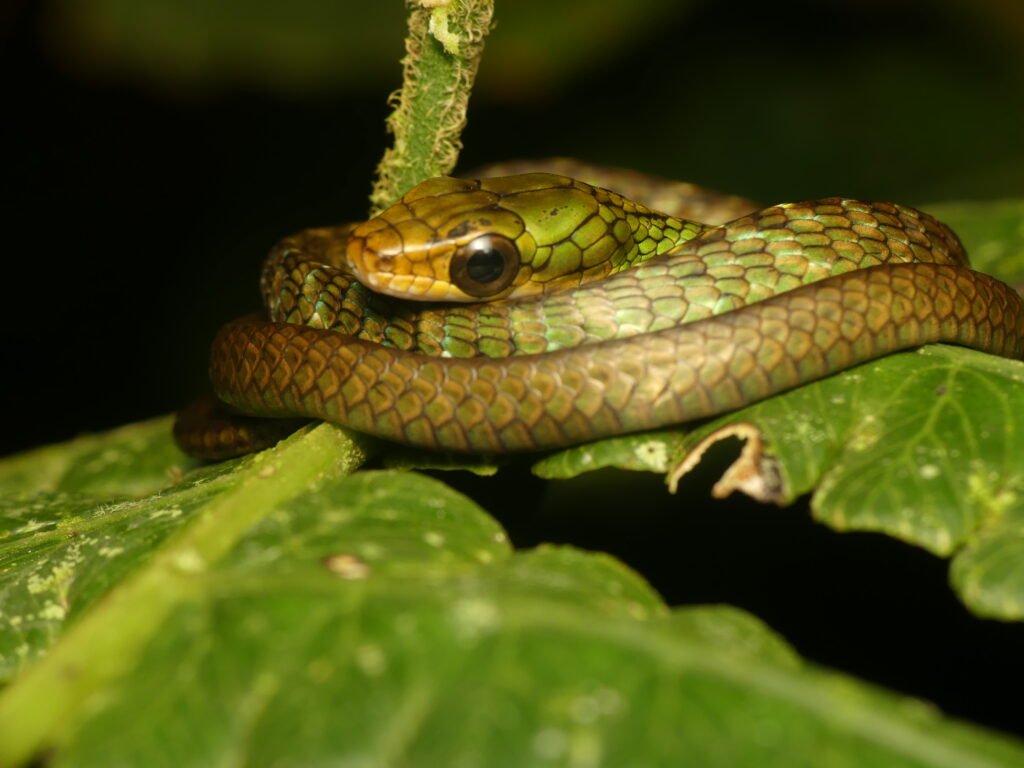
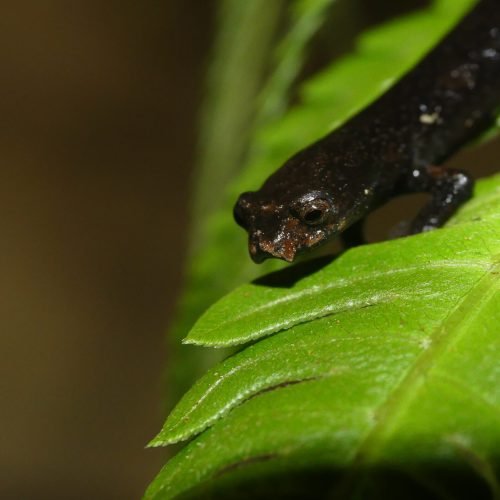
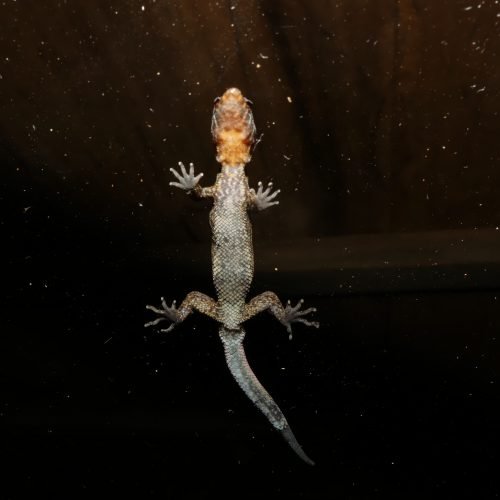
This book stands out for its herpetofauna (64 species of amphibians and 26 of reptiles), and there have been numerous discoveries of amphibians, which are also restricted distribution, including Pristimantis tungurahua (IN), P. marcoreyesi (IN), P. loujosti (DD), P. bellae (IN) and P. puruscafeum (VU). In this book there are at least 15 species of threatened amphibians, including the Frog Glass Andean Buckley (Centrolene buckleyi, CR), the Cutín Noble of Naturetrek (Noblella naturetrekii, IN) and Cecilia Abitagua (Caecilia abitaguae, IN). Recently described in 2023 Pristimantis donnelsoni. Among the species of reptiles endangered are Riama balneator (IN). There are also numerous species of endemic plants and threatened as Phaedranassa tunguraguae (EN), Zapoteca aculeata (IN) and Cedrela montana (VU). This book stands out for its diversity of orchids, for here we have found more than 15 species of the genus Teagueia, as well as other plants such as Blakea attenboroughii.
How to know the Private Protected Area Candelaria?
From the canton Baños de Agua Santa, can be reached with public or private transport to the village The Pleasure, the nearest town to the Protected Area, taking the road E30 Baños de Agua Santa – The Pleasure to approximately 5 kilometers. On the basis of this small village head in a southerly direction, crossing the bridge of the Pastaza river, a path-burdened approximately 6 km
Among the activities carried out in the protected area include conservation, scientific research and support of tourism CAVE (scientific, academic, volunteer and educational), ecotourism.


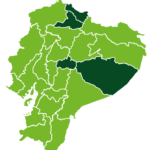







 Private Protected Area Candelaria
 Booking Naturetrek Candelaria
 Booking Naturetrek Vizcaya
 Zuñag Private Protected Area (Wildlife Refuge)
 Booking Noah Britton
 Reserve House of the Frogs of Adela
 Booking Machay
 Booking Chamana
 Booking Olivier Currat
 Booking Rio Verde
 Booking Nelson Palacios
 Spanish
Fundación EcoMinga is a non-ecuadorian non-profit organization that is dedicated to the protection of areas of high endemism and biodiversity.